
When Your Garage Door Sounds Like It's Falling Apart
You press the button, and instead of a smooth, quiet operation, your garage door groans, squeals, rattles, or grinds its way up the track. If this sounds familiar, you're not alone. Noisy garage doors are one of the most common complaints we hear from homeowners across Apple Valley, and the good news is that most causes are fixable — often quickly and affordably.
But here's the thing: ignoring those sounds can lead to bigger, more expensive problems down the road. That grinding noise today could turn into a broken door tomorrow. Let's walk through the most common reasons your garage door is making noise and what you should do about each one.
1. Worn or Dry Rollers
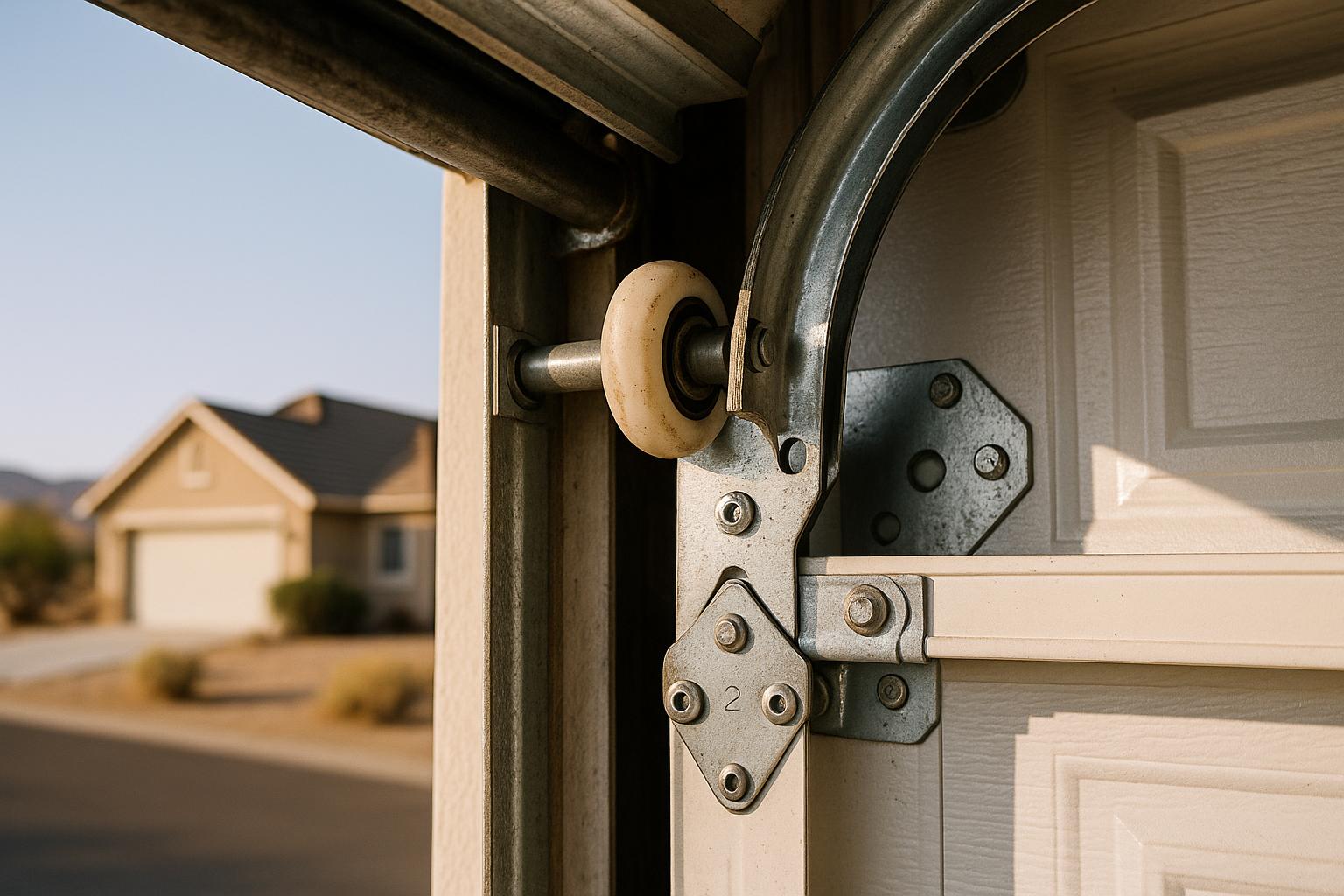
Garage door rollers are small wheels that guide your door along the metal tracks. Over time, these rollers wear down, and when they do, they create a grinding or squealing noise that echoes through your garage — and sometimes through your entire house.
There are two main types of rollers:
- Steel rollers: These are the most common and also the noisiest. They're durable but tend to get louder as they age.
- Nylon rollers: These are significantly quieter and don't require as much lubrication. Upgrading to nylon rollers is one of the best investments you can make for a quieter garage door.
If your rollers are visibly worn, cracked, or no longer rolling smoothly, it's time for a replacement. This is a job best left to a professional, especially since the rollers near the bottom brackets are under significant spring tension.
2. Lack of Lubrication
This is probably the simplest fix on the list, and it's one that many homeowners in Apple Valley overlook. Your garage door has several moving metal parts — hinges, rollers, springs, and the opener chain or screw — and all of them need periodic lubrication to operate quietly.
Here's what to do:
- Use a garage door-specific lubricant or a white lithium grease. Avoid WD-40 for this purpose — it's a solvent, not a long-term lubricant.
- Apply lubricant to the hinges, rollers, springs, and the opener rail.
- Wipe away any excess to prevent dust and dirt buildup, which is especially important in the High Desert where dust is a constant companion.
We recommend lubricating your garage door's moving parts every six months. If you can't remember the last time you did it, that's probably your answer right there.
3. Loose Hardware
Your garage door opens and closes hundreds — sometimes thousands — of times per year. All that vibration gradually loosens nuts, bolts, and brackets throughout the system. Loose hardware is one of the most common causes of rattling and vibrating noises.
Grab a socket wrench and tighten all the bolts on the door's hinges, brackets, and track mounts. Be careful not to overtighten, as this can strip the holes or warp the track. If you notice any bolts that won't stay tight or brackets that appear bent or damaged, give us a call.
4. Worn or Unbalanced Springs
If your garage door makes a loud banging or popping sound, the springs could be the culprit. Torsion springs and extension springs bear the full weight of your garage door, and as they age, they can become unbalanced or weakened.
An unbalanced door puts extra strain on the opener and other components, which creates additional noise and accelerates wear across the entire system. You can test your door's balance by disconnecting the opener and manually lifting the door halfway. If it doesn't stay in place on its own, the springs are likely out of balance.
Important: Never attempt to adjust or replace garage door springs yourself. These components are under extreme tension and can cause serious injury. This is always a job for a trained technician.
5. Opener Issues
Sometimes the noise isn't coming from the door itself — it's coming from the garage door opener. Older chain-drive openers are notoriously loud, producing a rumbling, clanking sound every time the door moves.
If your opener is more than 15 years old, you might want to consider upgrading to a newer, quieter model. Belt-drive openers are significantly quieter than chain-drive units and are a popular choice among homeowners in Apple Valley and Victorville who have bedrooms above or adjacent to the garage.
Other opener-related noises can come from:
- A worn gear or sprocket: This often sounds like a grinding or straining noise and usually means the opener is struggling to lift the door.
- Loose mounting hardware: If the opener unit itself is vibrating on the ceiling, the mounting bracket or bolts may need tightening.
- A misaligned chain or belt: This can cause a slapping or clicking sound during operation.
6. Bent or Misaligned Tracks
The metal tracks on either side of your garage door need to be perfectly aligned for smooth, quiet operation. If a track gets bumped, bent, or shifts out of alignment, the door will scrape, grind, or bind as it moves.
Visually inspect your tracks for any obvious bends, gaps between the rollers and the track, or debris buildup. In the Hesperia and Phelan areas, we often find that windblown sand and debris accumulate in the tracks, causing noise and resistance. A quick cleaning can sometimes solve the problem, but bent tracks typically need professional attention.
7. Worn Weatherstripping
While not always the loudest issue, old or damaged weatherstripping along the bottom of the door can create a scraping or dragging noise as the door closes. Replacing the bottom seal is an inexpensive fix that also helps keep dust, insects, and heat out of your garage — a real benefit during those hot Apple Valley summers.
When to Call a Professional
Some garage door noises are easy DIY fixes — a little lubricant here, a tightened bolt there. But many of the more serious causes, like spring problems, track misalignment, or opener malfunctions, require the tools and expertise of a trained technician.
Here are some signs it's time to call in the pros:
- The noise is getting progressively louder or more frequent
- Your door is visibly shaking or vibrating during operation
- The door moves unevenly or gets stuck partway
- You hear a loud snap or bang (this could indicate a broken spring)
- The opener strains or hesitates when lifting the door
Keep Your Garage Door Quiet and Running Smoothly
A noisy garage door is your home's way of telling you something needs attention. Whether it's a simple lubrication issue or a sign of a more serious mechanical problem, addressing the noise early can save you from costly repairs later.
At Apple Valley Garage Door Service, we help homeowners and businesses across Apple Valley, Victorville, Hesperia, Lucerne Valley, Oro Grande, and Phelan keep their garage doors running quietly and reliably. If your door is making sounds it shouldn't, don't wait for the problem to get worse. Give us a call, and we'll diagnose the issue, explain your options, and get things back to smooth, quiet operation — guaranteed.