
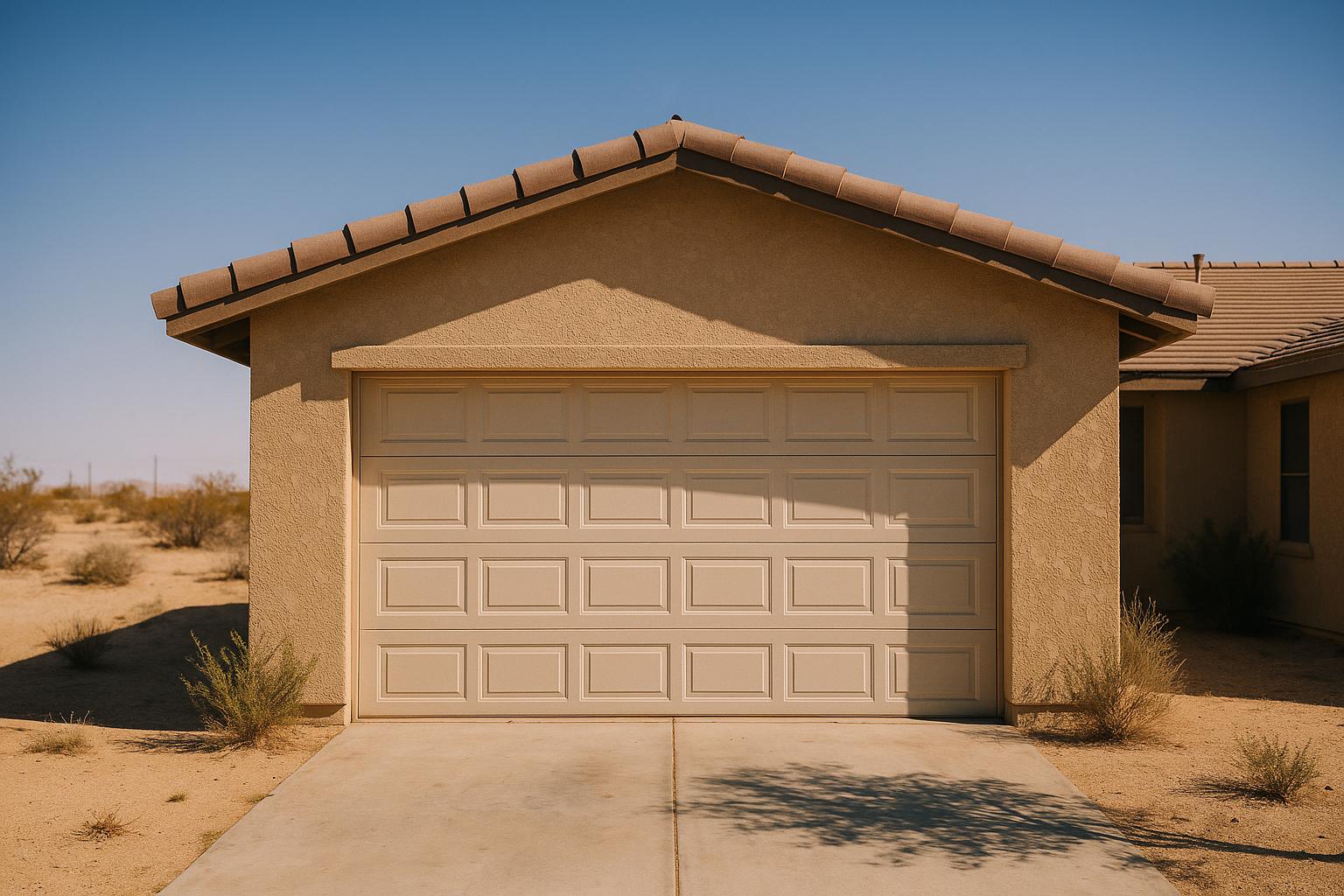
Summer in Apple Valley Is Brutal — Your Garage Door Feels It Too
If you've lived in Apple Valley for even one summer, you know the heat is no joke. Temperatures regularly climb past 100°F, and the sun beats down on your home relentlessly from June through September. While most homeowners think about their AC units and water bills, very few consider how that extreme heat affects their garage door.
The truth is, your garage door is one of the largest moving parts of your home, and it's directly exposed to the sun for hours every day. Heat causes metal to expand, lubricants to dry out, weatherstripping to crack, and electronics to malfunction. Without a little seasonal preparation, you could find yourself dealing with a stuck door, a broken opener, or an energy bill that's higher than it needs to be.
Here's how to get your garage door ready for the punishing High Desert summer — and keep it working reliably all season long.
Inspect and Replace Worn Weatherstripping
The rubber weatherstripping along the bottom and sides of your garage door is your first line of defense against heat, dust, and pests. In the desert climate around Apple Valley, Victorville, and Hesperia, weatherstripping deteriorates faster than it does in milder regions. UV exposure causes it to become brittle, cracked, and ineffective.
Before summer arrives, take a close look at all the seals around your garage door:
- Bottom seal: Check for cracks, gaps, or sections that have hardened and no longer flex against the ground.
- Side and top seals: Look for pieces that have pulled away from the frame or shrunk, leaving visible gaps.
- Threshold seal: If you have one, make sure it's still firmly adhered to the garage floor.
Replacing worn weatherstripping is one of the most affordable ways to keep hot air, sand, and critters out of your garage. It also helps reduce the strain on your air conditioning if your garage is attached to your home.
Lubricate All Moving Parts
Heat accelerates the evaporation and breakdown of lubricants on your garage door's moving components. Springs, hinges, rollers, and tracks all need proper lubrication to function smoothly. When these parts run dry, you'll notice increased friction, louder operation, and accelerated wear.
Use a silicone-based or lithium-based garage door lubricant — not WD-40, which is a solvent and not a long-term lubricant. Apply it to:
- Torsion or extension springs
- Roller bearings (if they're not sealed nylon rollers)
- Hinges at each panel joint
- The lock mechanism
- The opener's rail or chain
During the summer months, you may need to lubricate more frequently than usual. If your door starts sounding rough or sluggish, a fresh application often solves the problem immediately.
Check Your Garage Door Opener's Sensitivity Settings
Extreme heat causes metal garage door components to expand slightly. This expansion can change the way your door sits in the tracks and how much force is needed to open and close it. If your opener's force and travel limit settings are calibrated for cooler weather, the door may struggle to close completely or may reverse unexpectedly during the hottest part of the day.
Most modern openers have adjustment screws or digital settings for both the force applied and the distance the door travels. If you notice your door behaving differently in the afternoon heat versus the cool morning, the sensitivity settings may need a slight adjustment. If you're not comfortable making these changes yourself, a professional can dial them in quickly during a routine maintenance visit.
Insulate Your Garage Door
An uninsulated garage door in the desert is essentially a giant heat panel. Metal doors, especially single-layer steel doors, absorb and radiate heat directly into your garage. Interior garage temperatures can easily exceed 130°F on a summer afternoon in Apple Valley, which can damage stored items, make the space unusable, and force your home's cooling system to work harder.
Garage door insulation options include:
- Insulation kits: Foam board or reflective barrier kits that you can install inside the panels of your existing door.
- Insulated replacement doors: If your current door is old or damaged, upgrading to a double-layer or triple-layer insulated door provides the best thermal performance and durability.
Insulated doors also tend to be quieter and more rigid, which means they hold up better against the wind and temperature swings common in the High Desert.
Protect the Exterior Finish
The relentless sun doesn't just heat your garage door — it fades and damages the finish over time. Steel doors can develop surface rust where paint has chipped. Wood doors can dry out, warp, and crack. Even fiberglass and composite doors can become chalky and discolored.
To protect your door's exterior:
- Wash the door with mild soap and water to remove dust and grime buildup.
- Touch up any chips or scratches in the paint with a matching exterior-grade paint.
- For wood doors, apply a fresh coat of sealant or stain to prevent moisture loss and UV damage.
- Consider a lighter paint color if you're repainting — lighter colors reflect more heat and reduce thermal stress on the door.
Test the Safety Features
Summer is a great time to test your garage door's safety systems, especially if your kids are home from school and spending more time around the garage. Every modern garage door opener should have two key safety features:
- Auto-reverse mechanism: Place a piece of wood or a roll of paper towels on the ground where the door meets the floor. Close the door — it should reverse immediately upon contact. If it doesn't, the force settings need adjustment or the mechanism needs repair.
- Photo-eye sensors: These are the small sensors mounted near the bottom of the door tracks on each side. Wave an object in front of them while the door is closing. The door should stop and reverse. Clean the lenses with a soft cloth, and make sure they're properly aligned — desert dust can easily block or misalign them.
If either of these safety features isn't working correctly, stop using the door and call a professional. A malfunctioning garage door is a serious safety hazard.
Schedule a Professional Tune-Up
The best thing you can do for your garage door before summer is to schedule a professional maintenance visit. A trained technician can catch problems you might miss — like a spring that's near the end of its life cycle, a fraying cable, or a motor that's starting to overheat. Addressing small issues before the extreme heat arrives can save you from an emergency breakdown on the hottest day of the year.
At Apple Valley Garage Door Service, we offer comprehensive maintenance visits that cover lubrication, hardware inspection, balance testing, safety checks, and opener diagnostics. We serve homeowners across Apple Valley, Victorville, Hesperia, Lucerne Valley, Oro Grande, and Phelan — and we know exactly what the desert climate does to garage doors.
Don't Wait for a Breakdown
Summer garage door failures are incredibly common in the High Desert, and they always seem to happen at the worst possible time. A little preparation now can keep your door running safely and smoothly all season. Whether you tackle these steps yourself or call in a pro, your garage door — and your wallet — will thank you.
If you'd like help getting your garage door summer-ready, give us a call. We'll make sure everything is in top shape before the heat really sets in.