
Your Garage Door Springs Are Doing More Work Than You Think
Every time you open and close your garage door, the springs are doing the heavy lifting — literally. A standard two-car garage door can weigh anywhere from 150 to 300 pounds, and without properly functioning springs, your opener alone can't handle that load. Yet most homeowners in Apple Valley never think about their garage door springs until something goes wrong.
The truth is, springs are one of the most critical — and most stressed — components of your entire garage door system. Understanding their lifespan, recognizing the warning signs of wear, and knowing when to replace them can save you from a sudden breakdown, costly damage, or even a dangerous situation.
How Long Do Garage Door Springs Typically Last?
Most standard garage door springs are rated for approximately 10,000 cycles. One cycle equals one full open and one full close. If your household opens and closes the garage door four times a day, that works out to roughly seven to nine years of use before the springs reach the end of their expected lifespan.
However, several factors can shorten or extend that timeline:
- Frequency of use: Families that use the garage as their primary entrance may cycle the door six to eight times daily, cutting the spring life significantly.
- Climate and temperature swings: Here in the High Desert, we experience extreme temperature fluctuations — scorching summers and cold winter nights. Metal expands and contracts with these changes, which accelerates wear on springs over time.
- Maintenance habits: Springs that are regularly lubricated and inspected tend to last longer than those that are neglected.
- Spring quality: Not all springs are created equal. Higher-cycle springs (rated for 20,000 or even 25,000 cycles) are available and can double or triple the lifespan of standard springs.
If your garage door is approaching the seven-year mark and you've never had the springs inspected, it's worth scheduling a maintenance check.
Torsion Springs vs. Extension Springs: What's the Difference?
There are two main types of garage door springs, and knowing which type you have can help you understand what to expect when it comes to replacement.
Torsion Springs
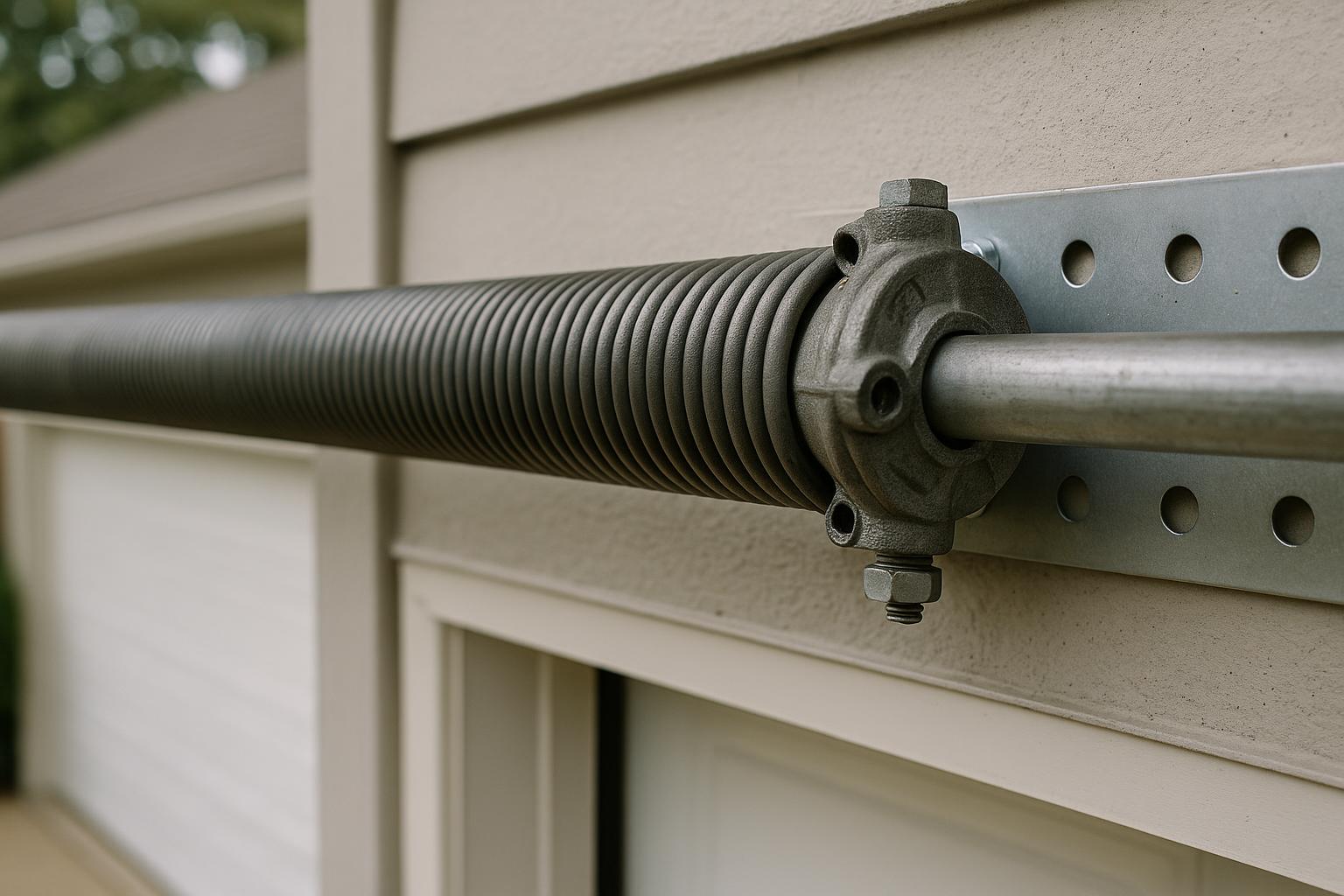
Torsion springs are mounted on a metal shaft directly above the garage door opening. They use torque to lift the door and are the more common type found in modern residential garage doors. Torsion springs tend to last longer, operate more smoothly, and are generally considered safer than extension springs.
Extension Springs
Extension springs run along the horizontal tracks on either side of the door. They stretch and contract to provide lifting force. While they're less expensive, they wear out faster and can pose a safety risk if they snap without proper safety cables in place.
If your home in Apple Valley still has extension springs, you may want to consider upgrading to torsion springs during your next replacement. It's a worthwhile investment in both safety and longevity.
Warning Signs Your Garage Door Springs Need Replacement
Springs rarely fail without giving you some advance warning. Here are the most common signs that your springs are wearing out or about to break:
- The door feels heavier than usual: If your garage door seems difficult to lift manually, or if the opener is straining more than it used to, weakened springs are likely the cause.
- Visible gaps in the spring coils: A healthy torsion spring has tightly wound coils. If you notice gaps or separation between the coils, the spring is losing tension and nearing the end of its life.
- The door opens unevenly: If one side of the door lifts higher than the other, one spring may be weaker or broken while the other is still functional.
- Loud bang from the garage: If you heard a loud, gunshot-like sound coming from your garage, a spring has likely already snapped. This is one of the most common ways homeowners discover a broken spring.
- The door won't stay open: A garage door that slowly drifts closed or won't stay in the halfway-open position is a classic sign of spring fatigue.
- The opener struggles or stops working: When springs fail, the opener has to work much harder. This can cause the motor to overheat, trip safety features, or stop functioning altogether.
Can You Replace Garage Door Springs Yourself?
We understand the DIY spirit — and we respect it. But garage door spring replacement is one job we strongly recommend leaving to trained professionals. Here's why:
Torsion springs are under extreme tension. A spring that's wound tight enough to lift a 200-pound door stores a tremendous amount of energy. If it's released improperly, it can cause serious injury or even death. Emergency rooms across the country treat garage door spring injuries every year, and many of those incidents involve homeowners attempting DIY repairs.
Professional technicians have the specialized tools, training, and experience to replace springs safely and correctly. They also know how to properly balance the door afterward, which is essential for smooth operation and preventing premature wear on your new springs and opener.
What to Expect During a Professional Spring Replacement
When you call a professional garage door service in Apple Valley for spring replacement, here's what the process typically looks like:
- Inspection: The technician will assess the current condition of your springs, cables, drums, and overall door balance.
- Recommendation: Based on the inspection, they'll recommend the appropriate spring type and cycle rating for your door's weight and your usage patterns.
- Replacement: The old springs are carefully unwound and removed, and new springs are installed and wound to the correct tension.
- Balancing and testing: The door is balanced, the safety features are tested, and the opener settings are adjusted as needed.
- Lubrication: All moving parts are lubricated to ensure smooth, quiet operation.
The entire process usually takes about an hour for a standard residential door. It's one of the most impactful repairs you can make in terms of restoring your garage door to like-new performance.
How to Make Your Springs Last Longer
While springs will eventually wear out no matter what, regular maintenance can help you get the most out of them:
- Lubricate springs every six months with a silicone-based or white lithium garage door lubricant. This reduces friction and helps prevent rust — especially important in the dry, dusty conditions we deal with across the High Desert.
- Schedule annual inspections so a technician can catch early signs of wear before a spring breaks unexpectedly.
- Consider high-cycle springs if you're replacing worn-out standard springs. The upfront cost is slightly higher, but the extended lifespan makes them a smart long-term investment.
- Keep the door balanced. An unbalanced door puts uneven stress on springs, causing one side to wear faster than the other.
Don't Wait for a Breakdown
A broken garage door spring is more than an inconvenience — it can leave your car trapped, your home less secure, and your daily routine disrupted. If your springs are showing signs of wear, or if it's been years since they were last inspected, now is the time to act.
At Apple Valley Garage Door Service, we provide honest assessments, quality parts, and reliable spring replacement for homeowners across Apple Valley, Victorville, Hesperia, and the surrounding communities. We show up on time, explain what needs to be done, and get your door working safely again — no surprises, no upsells.
Give us a call today to schedule a spring inspection or replacement. Your garage door will thank you.